Working With a Web Designer in Another Country (It's Easier Than You Think)
The objection to hiring a designer in another country is rarely about skill. It is about the practicalities: what if they are asleep when I need them, how do I pay, and how do I know they are real?
Fair questions. Here is how they actually play out.
Time zones matter far less than people expect
Website projects are not live-collaboration work. Almost all of it is: you describe what you need, someone builds it, you look and respond. That rhythm survives a time difference perfectly well — and often benefits from one, because work happens while you sleep and there is something waiting each morning.
What genuinely matters is response time within a working day, not overlapping office hours. A designer who replies within a few hours in their own time zone is easier to work with than a local one who takes three days.
The one thing to agree upfront: how quickly messages get answered, and on which channel. Not "what hours do you work." Speed of reply is the thing you will actually feel.
Trust is built with evidence, not proximity
Being in the same city has never stopped anyone taking a deposit and disappearing. What reduces risk is evidence you can check yourself:
- Live sites you can visit — not screenshots, actual working links belonging to real businesses.
- A reachable human on a messaging app, replying like a person rather than a template.
- Ownership stated in writing — domain, files and content in your name.
- Money that moves after the work, not before it. If you can see the site before you pay, distance stops being a risk at all.
What actually goes wrong on remote projects
Not time zones. It is almost always one of these:
- Vague briefs. Ambiguity that a face-to-face chat would resolve in a second can survive for days over email. Be specific and use examples.
- Feedback in fragments. Eleven separate messages over two days is harder to act on than one clear list. Collect your thoughts, send them together.
- No single channel. Some of it on email, some on WhatsApp, some in comments on a document. Pick one place for decisions.
All three are fixable by you, on your side, in about ten minutes.
How we work with clients abroad
Everything happens over messaging and email. You describe the business, we build the real site, you get a live link — usually within about a day — and you decide then. There is no meeting to schedule, nothing to sign before you have seen anything, and no requirement that either of us is awake at the same time.
Prices are shown in your own currency, once-off, starting at R2,500. You own the domain, the files and the content from day one.
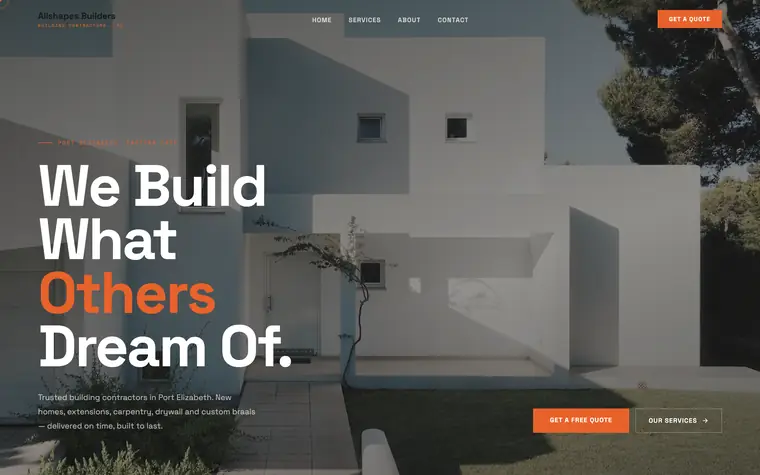
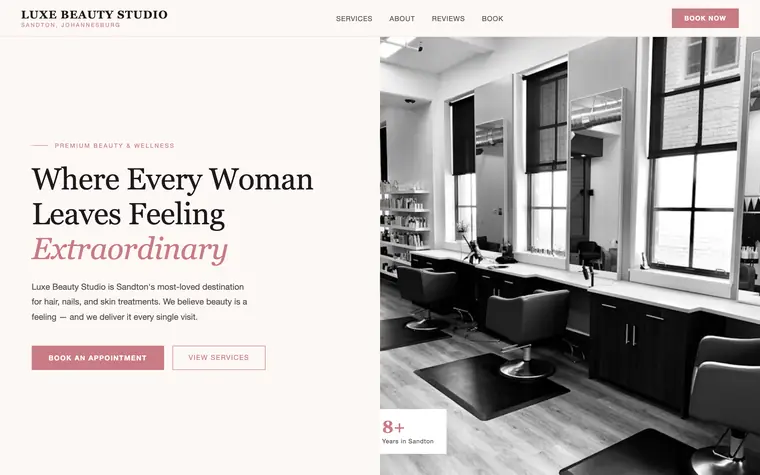
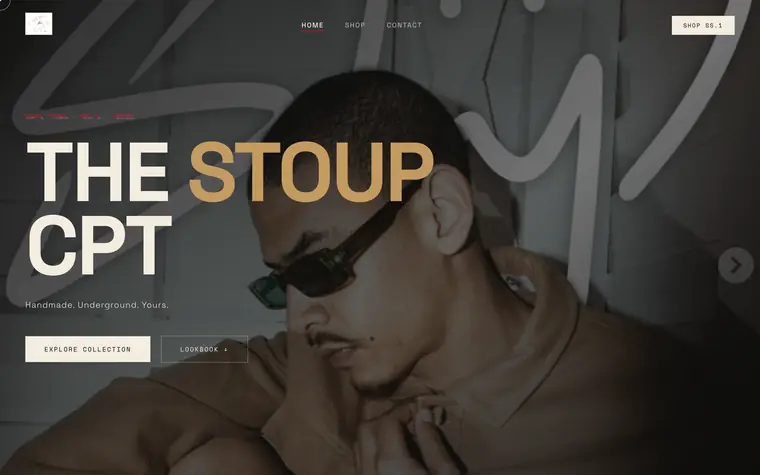
Recent work
Every one of these was designed in full before the business paid anything.

Wherever you are, we can build it.
We build it first — you only pay when you love it. Every quote is tailored to your project.
⚡ Get My Instant QuoteBuilding something bigger — a mobile app, a CRM or custom software? Those are scoped and quoted per project.
Frequently asked questions
Does a time zone difference make a website project harder?
Rarely. Website work is asynchronous — you describe, someone builds, you review. What matters is how quickly messages are answered within a working day, not whether office hours overlap.
How do I trust a web designer in another country?
Check evidence you can verify yourself: live sites you can visit, a person who replies like a person, ownership of domain and files stated in writing, and ideally payment that happens after you have seen the work.
What usually goes wrong on remote web design projects?
Vague briefs, feedback sent in scattered fragments, and decisions spread across several channels. All three are avoidable, and none of them are caused by distance.