The Six Trust Signals Every Business Website Needs
A visitor who has never heard of you makes a credibility judgement in a few seconds, mostly unconsciously, using whatever is visible. They are not evaluating your skill. They cannot see your skill. They are looking for reasons to believe you are real.
Six things do most of that work.
1. A human being
A real photograph of a real person — you, the team, someone actually doing the work — outperforms a stock image of a handshake every time. Anonymous businesses feel risky, and the fix costs one afternoon and a decent camera.
2. Reviews with names attached
"Great service! — J.S." persuades nobody. A full name, a location, and a specific detail about what was done is evidence. Three specific reviews beat thirty vague ones.
3. Work you can actually look at
Photographs of finished jobs, live links to sites you built, before-and-afters. Claims are free; evidence is not, and visitors know the difference.
The specificity rule: the more precise a claim is, the more believable it becomes. "Fast turnaround" is noise. "Live in about 24 hours" is a promise someone can hold you to — which is exactly why it reads as true.
4. Contact details that are obviously real
A working phone number, an email on your own domain, and a way to reach a person quickly. A contact form as the only option reads as someone who does not want to be contacted.
An email address at a free provider on a business site is a small signal, but visitors do register it.
5. Clarity about price
You do not have to publish a full price list. You do have to give people an anchor, because the alternative is that they assume the worst and leave. Even a starting figure — ours begin at R2,500 — removes the fear that asking will trap them in a sales process.
6. Signs of life
A copyright year that is current. Recent work. A blog post from this year rather than three years ago. Nothing says "this business may no longer exist" like a site that stopped in the past.
What to do this week
Pick the two you are missing most. In practice that is usually reviews with real names, and photographs of actual work. Both are free, both take an afternoon, and both move more enquiries than a redesign would.
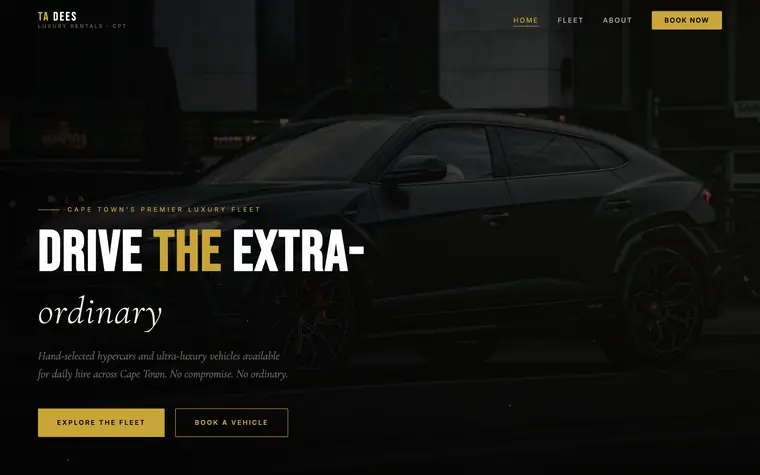
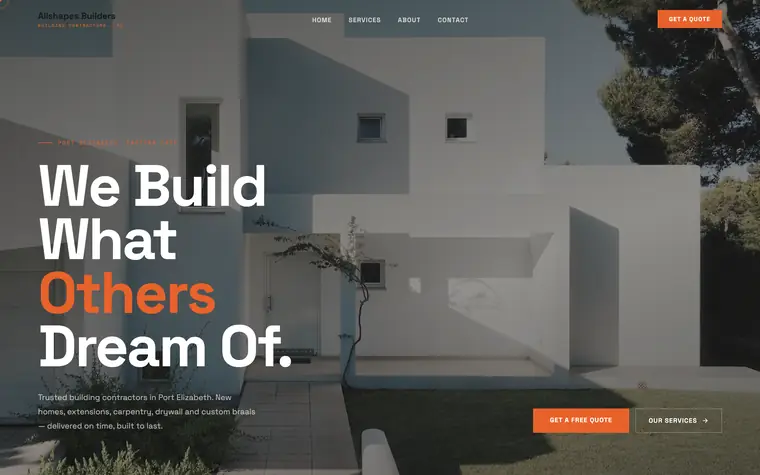
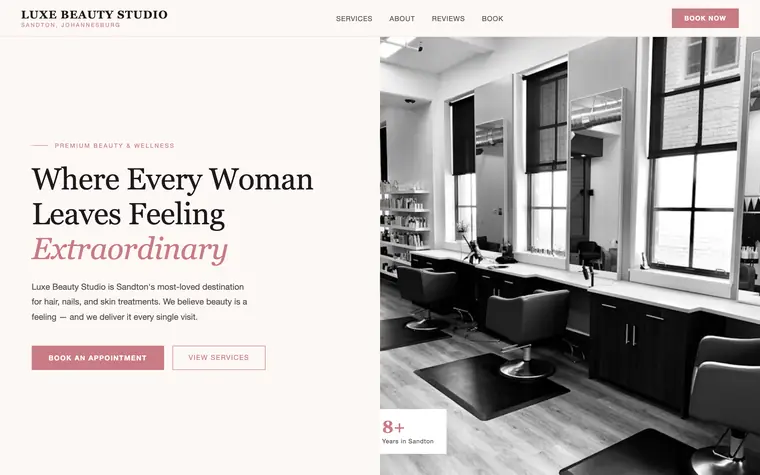
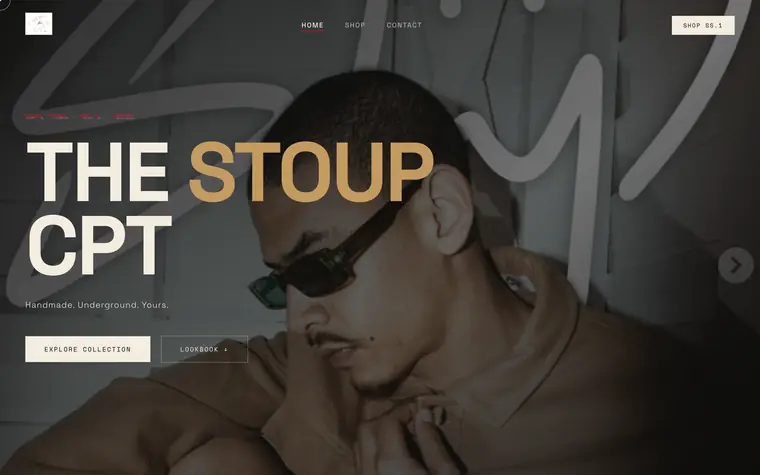
Recent work
Every one of these was designed in full before the business paid anything.
Want a site that looks as good as your work is?
We build it first — you only pay when you love it. Every quote is tailored to your project.
⚡ Get My Instant QuoteBuilding something bigger — a mobile app, a CRM or custom software? Those are scoped and quoted per project.
Frequently asked questions
What are trust signals on a website?
Visible cues that tell a stranger your business is real and competent — photographs of actual people and work, named reviews, working contact details, clear pricing, and evidence the site is current.
Do customer reviews on a website actually work?
Specific ones do. A full name, a location and a concrete detail about the work reads as evidence, while short anonymous praise reads as filler and is largely ignored.
Should I show prices on my website?
You do not need a full price list, but you should give a starting figure. Without any anchor, visitors assume the worst case and leave rather than ask.